JillLebofsky may earn a commission if you buy through links on this page, at no extra cost to you. That does not change what we report.
Part of our FemiPro overview. Last checked October 28, 2026.
Does FemiPro really work for bladder leaks? Nobody can say, because no published study has tested the FemiPro capsule, and its herbs were studied for urinary tract infections (UTIs), not leaks. The largest placebo trial of one of its herbs, bearberry, found no symptom benefit in 382 women with a UTI.[3] On top of that, every single dose in the formula is hidden on the label.[1]
Does FemiPro work? The short answer
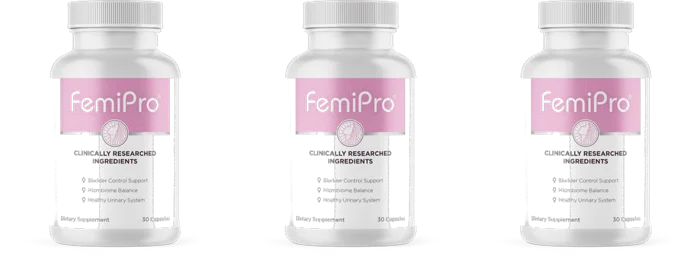
There is no evidence that FemiPro stops bladder leaks. The vendor says a "7-Second Bladder Strengthening Trick" fixes pee leaks in thousands of women, but the product is a daily capsule with a 350 mg "UTI Herbal Blend" and a 50 mg probiotic blend.[2][1]
What we can conclude: the label names four herbs (Mimosa pudica seed, cranberry, bearberry and berberine) and five Lactobacillus strains. What we cannot conclude: whether any of them is present at an amount that did something in a study. No single amount is printed, and the probiotic blend gives a weight in milligrams with no CFU (colony forming unit) count.
The vendor's mechanism, that bad bacteria cause "urinary dysbiosis" and overstimulate bladder muscle, is the vendor's claim. We found no study of FemiPro or of these ingredients that measured leaks. Pelvic floor training, bladder training and a doctor visit are the proven first steps.
Which evidence levels should you not confuse?
Four kinds of evidence get blended together on supplement sales pages. Only a trial of the finished product, repeated by another team, tells you whether that product works. FemiPro has evidence at the first two levels only, and for UTIs rather than leaks.
Plausibility
A mechanism that sounds reasonable. Cranberry proanthocyanidins (PACs) are proposed to stop bacteria sticking to surfaces, an idea discussed for teeth and gums[10] and, in a Cochrane review, for E. coli attaching to bladder cells.[11] Plausibility shows nothing about results in people.
Ingredient trials
Single ingredients tested in people. Cranberry products lowered the risk of symptomatic UTIs across 26 trials (risk ratio 0.70).[11] Bearberry ran in two UTI trials of 382 and 398 women.[3][4] L. crispatus was tested for recurrent UTI as a vaginal applicator, not a swallowed capsule.[5] Mimosa pudica has no controlled human trial at all.[6]
Finished-product trial
A test of the FemiPro capsule against a placebo. We found none. The vendor's figures of "over 12,000 customers" and "18,369 reviews" name no study and no review platform.[2]
Replication
A second, independent team repeating a result. With no first trial of the product, there is nothing to repeat. For bearberry, both trials fell short on symptom relief.
FemiPro claims vs what the evidence supports
The vendor's main claims are about leaks and the urinary microbiome. The studies behind the ingredients measured UTI symptoms, antibiotic use and vaginal infections. This table puts each claim, as the vendor words it, next to what the sources support.
| Vendor claim | Reasonable reading | Limitation |
|---|---|---|
| "Fixes pee leaks" | No study of the product or its ingredients measured leaks | The herbs were studied for UTIs only |
| "Repopulating your urinary microbiome" | Some Lactobacillus strains were studied, mostly for the gut or by vaginal use | No CFU count; the strain codes are not the trial strains |
| "Clinically researched ingredients" | Some ingredients have trials for other conditions | Different dose, form and condition from FemiPro |
| "Tested and certified for purity by independent labs" | No lab or certificate is published | Cannot be checked |
| "Best results for at least 180 days" | Bearberry trials ran 5 days | Daily bearberry for months raises a safety question |
Each row reflects the vendor pages and label read October 28, 2026.[2][1] If you still want to try it, check the 60-day refund terms on our FemiPro legitimacy check first.
Which ingredients matter most?
Bearberry and the probiotics matter most, because they have the most human data, and both show large mismatches with FemiPro. Bearberry was given as 630 mg of arbutin a day for 5 days in a UTI trial.[4] FemiPro's whole herbal blend weighs 350 mg, so its bearberry share must deliver far less arbutin, taken every day for months.
Cranberry is standardized to 30% PACs, but its weight is hidden. If cranberry filled the entire 350 mg blend, that would be 105 mg of PACs; at an even four-way split (about 88 mg), it would be about 26 mg. The 2023 Cochrane review of 50 cranberry trials found moderate certainty evidence of fewer symptomatic UTIs, but the products (juice, tablets, capsules) and doses were not standardized.[11] So there is no single studied PAC dose to match, and FemiPro's PAC amount is hidden anyway.
Probiotic trials count live bacteria: one L. acidophilus strain was tested at 10 billion CFU a day.[8] FemiPro lists 50 mg of five strains with no CFU, and NCCIH notes one strain's effect does not carry to another.[7] Berberine trials studied weight, liver markers and blood sugar, not the bladder.[9] The full breakdown is on our FemiPro ingredients page.
What results are realistic to expect?
For leaks, no trial gives a result or a timeframe, so no realistic expectation can be set. The measured results are all about UTIs. In the ATAFUTI trial, bearberry did not change frequency symptoms on days 2 to 4 compared with placebo, and antibiotic use was 39.9% vs 47.4%, not a significant gap.[3]
For cranberry, the Cochrane review found a lower risk of symptomatic UTIs in women with recurrent UTIs (risk ratio 0.74), with little or no benefit in pregnancy, in older adults in care homes, or in people whose bladder does not empty fully.[11] None of its trials measured leaks.
In REGATTA, women on bearberry used 63.6% fewer antibiotic courses than with fosfomycin, but symptoms were worse and kidney infections were 8 vs 2.[4] Vaginal L. crispatus gave 15% vs 27% recurrent UTI over about 10 weeks, a gap that was not statistically significant.[5]
The vendor advises at least 180 days, while the refund window is 60 days from delivery.[2]
When should you see a doctor instead?
See a doctor or nurse before buying any supplement if leaks are new, getting worse or come with other symptoms. Leaks have causes a clinician can find and manage, and a pelvic floor physiotherapist can teach exercises that work. A supplement should never delay care for an infection.
See a doctor right away if you have:
- Burning or pain when you pee, or a strong, frequent urge to go (possible UTI)
- Blood in your urine, or pink, red or cola-colored urine
- Fever, chills, or pain in your side or back (possible kidney infection)
- UTI symptoms while pregnant
- Leaks that start suddenly, or come with numbness or weakness in the legs
Evidence conclusion
FemiPro has no product trial and no ingredient evidence for leaks. Cranberry has moderate evidence for fewer UTIs, not for leaks, bearberry was mostly negative even for UTIs, and hidden doses block any comparison with studies. Read our FemiPro side effects guide before ordering.
| Decision question | Current assessment (October 28, 2026) |
|---|---|
| Is there a trial of FemiPro itself? | None found |
| Is any ingredient studied for bladder leaks? | No; studies cover UTIs, vaginal infections, gut and weight |
| Can the doses be checked against studies? | No; both blends hide every amount, and there is no CFU count |
| Is there a safety question? | Yes; daily bearberry and berberine call for caution |
| What comes first for leaks? | Pelvic floor training, bladder training, a doctor visit |
Back to the FemiPro overview.
Frequently asked questions
Does FemiPro help with bladder leaks?
No study shows that. FemiPro has not been tested in a published trial, and its herbs were studied for urinary tract infections, not leaks. Pelvic floor training, bladder training and a visit to a doctor are the proven first steps for leaks.
What is FemiPro used for?
The vendor sells FemiPro for bladder leaks and says it rebalances the urinary microbiome. The capsule holds a 350 mg herbal blend named a UTI blend and a 50 mg probiotic blend of five Lactobacillus strains, with every dose hidden.
How long does FemiPro take to work?
No trial gives a timeframe for leaks, so nobody can say. The vendor advises at least 180 days of use, but the refund window is 60 days from delivery, and the bearberry trials it borrows from ran only 5 days.
Can FemiPro replace antibiotics for a UTI?
No. In one trial, women given uva ursi instead of an antibiotic had more kidney infections, 8 vs 2. Anyone with burning, urgency, fever or blood in the urine should see a doctor rather than rely on a supplement.
Are FemiPro results from real studies?
The vendor cites over 12,000 customers and 18,369 reviews but names no study or review platform. We found no published trial of the FemiPro capsule. The ingredient studies used other doses, forms and conditions.
Sources
- FemiPro Supplement Facts label (image). FemiPro vendor, read October 28, 2026.
- FemiPro sales page, claims, FAQ and price grid. FemiPro vendor, read October 28, 2026.
- ATAFUTI randomized trial of uva ursi in women with UTI (abstract). PubMed, read October 27, 2026.
- REGATTA trial: uva ursi vs fosfomycin for uncomplicated UTI (abstract). PubMed, read October 27, 2026.
- Lactin-V (L. crispatus CTV-05) for recurrent UTI, phase 2 trial (abstract). PubMed, read October 27, 2026.
- Vaidya 1986, Mimosa pudica review with pilot study (abstract). PubMed, read October 27, 2026.
- Probiotics: What You Need To Know. NCCIH, NIH, read October 20, 2026.
- Martoni 2020, L. acidophilus DDS-1 in IBS (abstract). PubMed, read October 20, 2026.
- Overview of systematic reviews of berberine (abstract). PubMed, read October 19, 2026.
- Cranberry proanthocyanidins and anti-adhesion in oral disease (abstract). PubMed, read October 20, 2026.
- Williams 2023, Cochrane review update on cranberries and urinary tract infections (abstract). PubMed, read October 28, 2026.
This page is general information, not medical advice. Dietary supplements are not reviewed by the FDA for safety or effectiveness before they are sold and are not intended to diagnose, treat, cure or prevent any disease. Talk to your doctor before taking any supplement, especially if you are pregnant, nursing, take medication or have a health condition.